Website Development

darkline

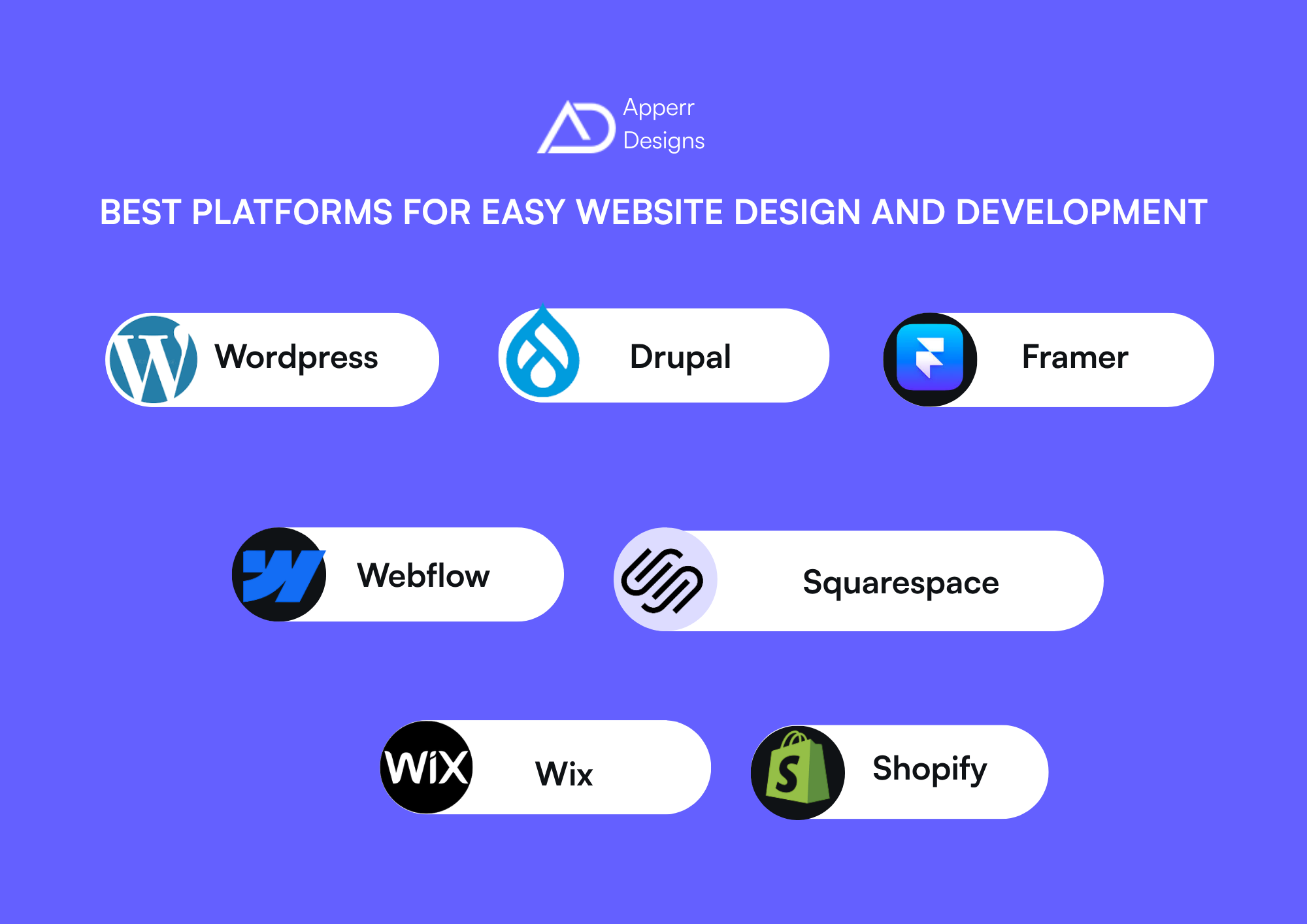
Best Platforms for Easy Website Design and Development in 2026

Janet Oduyomi

May 28, 2026

|

6 mins read

blog imgline

Introduction

Building a website today is much easier than it was a few years ago.

You no longer need to be an expert developer to create a professional website for your business, portfolio, startup, online store, or personal brand. Modern website design and development platforms now make it possible to build fast, responsive, and scalable websites with little or no coding experience.

But with so many website builders, CMS platforms, and no-code tools available in 2026, choosing the right one can feel overwhelming.

Some platforms are built for beginners, while others are designed for scalable business systems, SaaS products, or enterprise-grade web applications.

In this guide, we’ll explore the best platforms for easy website design and development, their strengths, limitations, and ideal use cases.

What Makes a Good Website Development Platform?

What Makes a Good Website Development Platform? 

The best platforms usually balance simplicity with scalability.

1. Easy Design Tools

A good platform should allow users to:

  • Build pages visually
  • Edit layouts easily
  • Add content without coding

2. Responsive Design

Websites must work perfectly on:

  • Mobile
  • Tablets
  • Desktop

3. Scalability

A good platform should support business growth without requiring a full rebuild.

SEO Features

Strong SEO support includes:

  • Fast loading speed
  • Clean URLs
  • Meta titles and descriptions
  • Mobile optimization

4. Integrations

Most businesses need connections with:

  • Email marketing tools
  • CRM systems
  • Analytics tools
  • Payment systems
Best Platforms for Easy Website Design and Development (2026)

Best Platforms for Easy Website Design and Development (2026)

1. WordPress

WordPress remains one of the most powerful and widely used website platforms in the world.

Best For

  • Blogs
  • Business websites
  • SEO-focused sites
  • Custom development

Why People Choose WordPress

  • Huge plugin ecosystem
  • Strong SEO capabilities
  • High flexibility
  • Large developer community

Limitations

  • Requires setup and maintenance
  • Can become complex with plugins

WordPress remains one of the strongest long-term platforms for scalable websites.

2. Webflow

Webflow is a modern visual website builder popular among designers and startups.

Best For

  • Startup websites
  • Marketing websites
  • Creative portfolios

Why People Choose Webflow

  • Visual design control
  • Clean code output
  • Strong animations
  • Built-in CMS

Limitations

  • Learning curve
  • Pricing increases with scale

3. Shopify

Shopify is one of the best platforms for eCommerce websites.

Best For

  • Online stores
  • Retail businesses
  • Dropshipping

Why People Choose Shopify

  • Easy setup
  • Secure payments
  • Inventory management
  • Strong app ecosystem

4. Wix

Wix is a beginner-friendly website builder focused on simplicity.

Best For

  • Small businesses
  • Personal websites
  • Freelancers

Why People Choose Wix

  • Drag-and-drop editor
  • Fast setup
  • Built-in hosting

Limitations

  • Limited scalability
  • Less control for advanced systems

5. Framer

Framer is a modern design-first website builder.

Best For

  • Landing pages
  • Startup websites
  • UI-focused brands

Why People Choose Framer

  • Smooth animations
  • Fast publishing
  • Modern templates

6. Squarespace

Squarespace focuses on simplicity and aesthetics.

Best For

  • Portfolios
  • Creative professionals
  • Small businesses

7. Bubble

Bubble is a powerful no-code platform for building web applications.

Best For

  • SaaS MVPs
  • Marketplaces
  • Internal tools

Why People Choose Bubble

  • No-code logic system
  • Built-in database
  • User authentication

8. Elementor + WordPress

Elementor combined with WordPress allows visual editing with full flexibility.

Best For

  • Agencies
  • Business websites
  • Landing pages

No-Code vs Custom Development

1. No-Code Platforms

Examples:

  • Bubble
  • Webflow
  • Wix
  • Framer

Advantages

  • Faster launch
  • Lower cost
  • Easy updates

Limitations

  • Scalability limits
  • Platform dependency

2. Custom Development

Custom development uses frameworks like:

  • React
  • Next.js
  • Laravel
  • Node.js

Advantages

  • Full control
  • Better scalability
  • Advanced architecture

Limitations

  • Higher cost
  • Longer development time

For scalable digital systems, businesses often combine platforms with expert development support like Apperr Web Development Services.

Which Website Platform Is Best for SEO?

Which Website Platform Is Best for SEO?

1. WordPress → Best for content SEO

2. Webflow → Clean code + speed

3. Shopify → Strong eCommerce SEO

4. Custom development → Full SEO control

Best Platforms for Different Business Types

1. Startups

  • Webflow
  • Framer
  • Bubble

2. eCommerce

  • Shopify
  • WooCommerce

3. Small Businesses

  • Wix
  • Squarespace
  • WordPress

4. SaaS Products

  • Bubble (MVP stage)
  • Custom development

How AI Is Changing Website Development

AI is transforming how websites are built in 2026:

  • AI layouts
  • AI content tools
  • Automated SEO suggestions
  • Faster design workflows

Even with AI tools, businesses still need strategy, UX planning, and scalable system design.

Should Businesses Still Hire Developers?

Yes, especially for scaling businesses.

Developers help with:

  • Performance optimization
  • Security
  • Custom integrations
  • Scalable architecture

For long-term growth, many businesses combine platforms with expert support like Apperr Web Development Services and strategic guidance through CTO as a Service.

Conclusions & FAQs

Final Thoughts

The best website platform depends on your goals.

Some businesses need simplicity. Others need scalable systems that can support SaaS products, automation tools, or enterprise applications.

Platforms like WordPress, Webflow, Shopify, Bubble, Wix, and Framer all play different roles in modern web development.

The key is choosing a platform that supports your current needs while still allowing future growth.

Frequently Asked Questions

1. What is the best website platform in 2026?

WordPress, Webflow, and Shopify are among the most popular depending on your needs.

2. Which platform is easiest for beginners?

Wix and Squarespace are the easiest for beginners.

3. What is the best platform for business websites?

WordPress and Webflow are strong choices for business websites.

4. Can I build a website without coding?

Yes. Platforms like Wix, Webflow, Framer, and Bubble allow no-code website building.

Build With Apperr

Need a professional website or scalable digital system?

Apperr helps businesses design and develop websites, web apps, SaaS platforms, and AI-powered systems built for growth.

Visit the Apperr Contact Page to get started.

line

Back to blogs