


Software Development


Choosing the right software is one of the most important technology decisions a business can make. The right solution can streamline operations, improve customer experiences, and support long-term growth, while the wrong one can create inefficiencies and limit scalability.
For most organizations, the decision comes down to custom software or off-the-shelf software.
Off-the-shelf software provides a ready-made solution that can be deployed quickly, whereas custom software is built specifically around your business processes, goals, and requirements. While one business may benefit from a commercial software package, another may require a tailored solution to remain competitive.
If you're considering a solution built around your business, explore Apperr's Custom Software Development services.
In this guide, we'll compare custom software and off-the-shelf software, examine their advantages and limitations, and help you determine which option delivers the greatest long-term value.
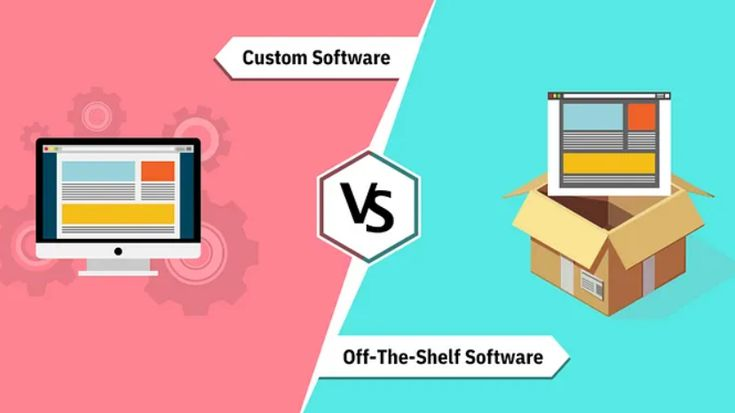
The biggest difference is who the software is built for.
Custom software is developed specifically for a single business. Through custom software development, every feature is designed to match your workflows, operational needs, and future goals. Businesses with unique requirements often work with providers offering custom software development services to create software that fits their operations.
By contrast, off-the-shelf software is designed for a broad audience.
These ready-made applications are quick to implement and often cost less initially, but they may require businesses to adapt their processes instead of the software adapting to them.
Purpose: Built specifically for your business
Customization: Fully customizable
Cost: Higher upfront investment
Deployment: Longer implementation
Ownership: Business owns the software
Scalability: Grows with your business
Integrations: Built around existing systems
Security: Tailored to business needs
Purpose: Built for many businesses
Customization: Limited customization
Cost: Lower upfront cost
Deployment: Quick deployment
Ownership: Vendor owns the software
Scalability: Depends on vendor updates
Integrations: May require workarounds
Security: Standard security features
Neither option is universally better. The right choice depends on your business goals, budget, workflows, and growth plans.
Off-the-shelf software works well for organizations with standard requirements, while custom software offers greater flexibility and scalability for businesses with unique processes.
While off-the-shelf software is suitable for common business needs, there are situations where investing in custom software delivers greater long-term value.
If standard software forces your team to change how they work, custom software can be designed around your existing processes instead.
Manual tasks and disconnected systems reduce productivity. Businesses looking to improve efficiency can benefit from Apperr's AI Agents & AI-Powered Automation solutions, which streamline repetitive processes and enhance operational performance.
Whether you're connecting CRMs, ERPs, accounting platforms, or third-party applications, custom software development creates a unified system that eliminates data silos.
As your business evolves, your software should evolve too. Custom software allows you to add users, features, and functionality without replacing your entire system.
Industries such as healthcare, finance, and legal services often require enhanced security and regulatory compliance. A tailored solution provides greater control over data protection.
Unlike commercial software, custom software gives your business ownership of the application, data, and future development roadmap.
Off-the-shelf software is often the better option when:
Many businesses choose software based only on today's requirements. However, software should also support future growth.
While off-the-shelf software is an excellent starting point for many organizations, businesses planning to expand often benefit from investing in custom software that evolves alongside their operations.
According to Gartner, organizations should evaluate software based on its long-term business value rather than short-term implementation costs.
When comparing custom software and off-the-shelf software, it's easy to focus on upfront costs. However, the real value lies in how well the software supports your business over time.
For businesses with standard processes, off-the-shelf software offers a practical and cost-effective solution. It provides quick deployment, proven functionality, and predictable pricing.
However, as businesses grow, their requirements often become more complex. New workflows, additional users, integrations, and automation needs can expose the limitations of ready-made software. In these situations, custom software development provides greater flexibility, scalability, and long-term return on investment.
The best choice depends on your business goals, not just today's needs. If your organization depends on unique workflows, complex integrations, or long-term growth, investing in custom software can reduce operational bottlenecks and create a lasting competitive advantage.

Custom software is often the better choice if your business:
If your requirements are relatively simple and speed is the priority, off-the-shelf software may still be the right fit.
The key is choosing the solution that supports both your current operations and your future growth.
Many companies begin with off-the-shelf software because it's affordable and quick to implement. As the business grows, however, they often encounter common challenges such as:
Rather than working around these limitations, businesses often transition to custom software that's designed specifically for their operations. This provides greater flexibility, improves efficiency, and allows technology to evolve alongside the business.
Custom software is built specifically for one business, while off-the-shelf software is a ready-made product designed for a broad range of users.
Off-the-shelf software is commercially available software that's pre-built and ready to use without requiring custom development. Popular examples include Microsoft 365, Slack, QuickBooks, and Trello.
It usually requires a higher upfront investment, but custom software often delivers greater long-term value through improved efficiency, scalability, and reduced operational costs.
A business should consider custom software if it has unique workflows, requires advanced integrations, needs stronger security, or expects significant growth.
Yes. Custom software development allows businesses to integrate CRMs, ERPs, accounting software, payment gateways, and other business applications into one seamless system.
Choose off-the-shelf software if your needs are straightforward, your budget is limited, and you need a solution quickly. Choose custom software if your business requires tailored functionality, flexibility, and software that can grow alongside your organization.
There's no one-size-fits-all answer in the custom software vs. off-the-shelf software debate.
Off-the-shelf software is ideal for businesses seeking a quick, affordable solution for standard business processes. Custom software, on the other hand, is built around your business, giving you greater flexibility, seamless integrations, stronger security, and the ability to scale without the limitations of generic applications.
At Apperr, we build secure, scalable custom software that helps businesses streamline operations, automate workflows, and support long-term growth. Whether you need Custom Software Development, UI/UX Design, or CTO as a Service, our team works with you to create technology that fits your business not the other way around.
Ready to build software designed around your business?
Contact Apperr today to discuss your project and discover how our Custom Software Development services can help you create a solution built for long-term success.
%201.png)


