


Technology


You’re running a business in 2026, and at some point, this question shows up again and again:
“Do I need a mobile app, or is a website enough?”
You’ve probably seen competitors launching apps, sending push notifications, and talking about “user engagement.”
At the same time, you know a well-designed website can still bring traffic, leads, and sales without the extra cost and complexity of an app. The confusion is real, and the wrong decision can cost you time, money, and momentum.
What makes it even harder is that everyone seems to have a different opinion. Some say mobile apps are the future. Others insist a website is all your business needs.
The truth? There’s no one-size-fits-all answer.
The best choice depends on how your customers behave, what your business goals are, and how you plan to grow.
That’s why this guide breaks down mobile app vs website in clear, simple terms: no tech jargon, no hype. You’ll understand the real difference between a mobile app and a website, see practical business use cases, and learn how to choose the option that actually makes sense for your business in 2026.
By the end of this article, you’ll be able to confidently decide whether a mobile application or website is the smarter move or if your business needs both.
When comparing a mobile app vs a website, the best way to decide is to look at what each option does well and where each one falls short. Understanding the pros and cons of a website vs a mobile app helps you avoid building the wrong product for your business needs.
A mobile app is installed directly on a user’s phone, which gives it some strong advantages:
This is why businesses that rely on frequent user interactions like e-commerce, fintech, fitness, and booking platforms often choose a mobile application over a website.
Despite their benefits, mobile apps also come with challenges:
If your business is just starting or has a limited budget, these factors can make a mobile app less practical in the early stages.
A website is still one of the most powerful digital tools for businesses in 2026:
For businesses focused on visibility, content, and lead generation, a website vs application comparison often favors websites.
Websites also have limitations:
In simple terms:
Looking at real-life examples makes the mobile app vs website debate much clearer.
Different businesses choose different solutions based on how their customers behave and how often they need to interact with them.
This is where the difference between app and website becomes very practical, not theoretical.
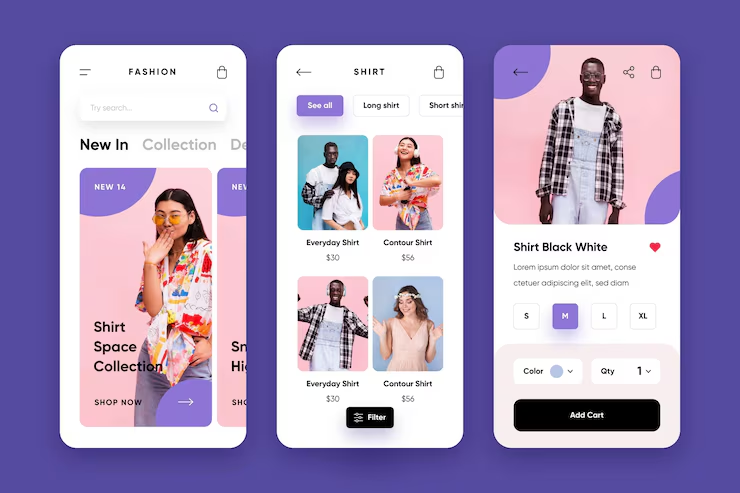
Most successful e-commerce brands use both a website and a mobile application, but they don’t serve the same purpose.
This is a classic website vs application strategy.
According to insights shared by Shopify on e-commerce growth and mobile behavior, users often discover brands through websites but convert faster on mobile apps due to speed and saved preferences.
This clearly shows that the mobile app vs website decision depends on the customer journey, not trends.
For service businesses like consulting firms, agencies, and professional services:
In this case, a mobile application vs website comparison usually favors websites because users don’t need frequent interaction.
This aligns with recommendations from HubSpot and Clutch, which consistently highlight websites as the primary digital asset for lead generation and brand credibility.
Here’s where many people get confused between a web app vs a website.
Examples include tools like project management platforms or analytics software.
The difference between a web app and a website is functionality:
In many cases, businesses later extend the web app into a full mobile app for better accessibility and engagement.
From these use cases, one thing is clear:
If your business requires frequent engagement and personalized experiences, a mobile app may be the better choice. If your goal is visibility, lead generation, and accessibility, a website often works best.
👉 If you’re considering building a mobile app for your business, this is where Apperr’s Mobile App Development services come in. Our team helps businesses choose the right approach and build scalable, user-friendly mobile applications tailored to their goals.

Not sure which option fits your business?
Download our free interactive “App or Website Decision Planner”.
It walks you through the exact questions you need to answer to decide whether a mobile app, website, or both is right for your business.
The difference between a mobile app and a website mainly comes down to access, experience, and purpose.
A website is accessed through a browser and works across all devices. It’s ideal for visibility, SEO, and reaching new users quickly. This is why, in a website vs mobile app comparison, websites are often the first step for most businesses.
A mobile app, on the other hand, is downloaded onto a user’s device. In the mobile app vs website debate, apps stand out for:
This makes a mobile application vs a website better for businesses that need frequent engagement or repeat usage.
In simple terms:
When comparing a website vs a mobile app, security and revenue potential often influence the final decision.
Both options can be secure when built properly, but they work differently:
In the mobile app vs website revenue debate:
According to data shared by Statista, mobile apps generate billions annually, but only when they solve a frequent user need. This reinforces that “apps are not automatically more profitable than websites strategies matters more than format”.
It depends on your business goals. A website is better for reach and SEO, while a mobile app is better for engagement and repeat users.
The main difference between a mobile app and a website is access. Websites run in browsers; apps are installed and offer faster, more personalized experiences.
In the mobile app vs website comparison, apps perform better for offline access, push notifications, and personalized user experiences.
Neither is automatically more profitable. Apps earn through subscriptions and in-app purchases, while websites generate revenue from sales, ads, and leads.
Limited offline access, slower performance, less personalization, lower engagement, and dependence on internet connectivity.
It depends on monetization. With ads or subscriptions, 10,000 downloads can generate anywhere from a few hundred to several thousand dollars.
Choosing between a mobile app and a website comes down to your business goals, audience, and engagement needs.
Some businesses even benefit from both, using a website for reach and an app for frequent users.
Still unsure which path is right for your business?
Download our FREE interactive “App or Website? Decision Planner”. Fill it out step by step to see whether a mobile app, website, or both is best for your business.
Ready to take the next step?
Make the right decision for 2026 and give your business the digital edge it deserves.
%201.png)


