


Cybersecurity


“What if someone is using your photo right now pretending to be you?”
Fake social media accounts and online impersonation are rising at an alarming rate.
From duplicate Instagram profiles to AI-generated deepfakes, digital identity misuse has become easier and more convincing.
For influencers, entrepreneurs, and growing brands, a single fake account can damage trust, mislead followers, and even cost real money.
This is no longer just about privacy. It's about reputation, credibility, and control over your digital voice.
Built by Apperr, PhishSpot AI is designed to help individuals and brands detect fake profiles, uncover image misuse, and identify potential deepfakes before they escalate. Using AI-powered analysis, it scans Instagram profiles, analyzes profile images, and searches across the web to reveal where your digital identity may be at risk.
In a world full of digital imposters, protecting your identity should be smart, fast, and automated.
Let’s explore how fake accounts work and how you can stop them before they cost you your reputation.
Online impersonation is when someone pretends to be you, your brand, or your social media profile to deceive others. It can take many forms from fake Instagram accounts using your photos to AI-generated deepfakes that mimic your likeness.
This kind of impersonation can harm your reputation, erode trust with your audience, and cost money.
Scammers and fraudsters use fake profiles to:
For brands, influencers, and entrepreneurs, even one fake account can undermine the trust you’ve worked hard to build.
According to Statista, millions of social media accounts are fake or fraudulent and the number continues to grow.
Protecting your online presence from fake accounts is essential for anyone building influence or running a business online.
Fake accounts and impersonation carry real financial, emotional, and reputational consequences.
Many people rely on privacy settings, strong passwords, or two-factor authentication.
While important, these measures only protect account access not impersonation happening elsewhere online.
Reporting fake accounts can take days or weeks. By then, damage may already be done.
Strong passwords protect logins but cannot detect cloned profiles.
Platforms rely on users to report impersonation rather than proactively detecting it.
Traditional security tools cannot reliably identify manipulated images.
According to Cybersecurity Ventures, online fraud and identity theft are expected to cost individuals and businesses over $10 trillion globally by 2025, demonstrating how urgent proactive protection has become.
Imagine this:
You grow your Instagram to 25,000 followers.
A scammer:
They run a fake giveaway.
Several followers send money.
Days later, people start tagging you:
“Is this you?”
By the time you report the fake account:
Now imagine instead:
You run a scan.
The impersonator is detected early.
You alert your audience immediately.
Damage is minimized.
That’s the difference between reactive and proactive protection.
In today’s digital world, protecting your online presence from fake accounts and impersonation requires more than manual reporting or basic privacy settings.
That’s why Apperr built PhishSpot AI: An AI-powered tool designed to scan social media profiles, detect deepfakes, and uncover impersonators before they damage your reputation.
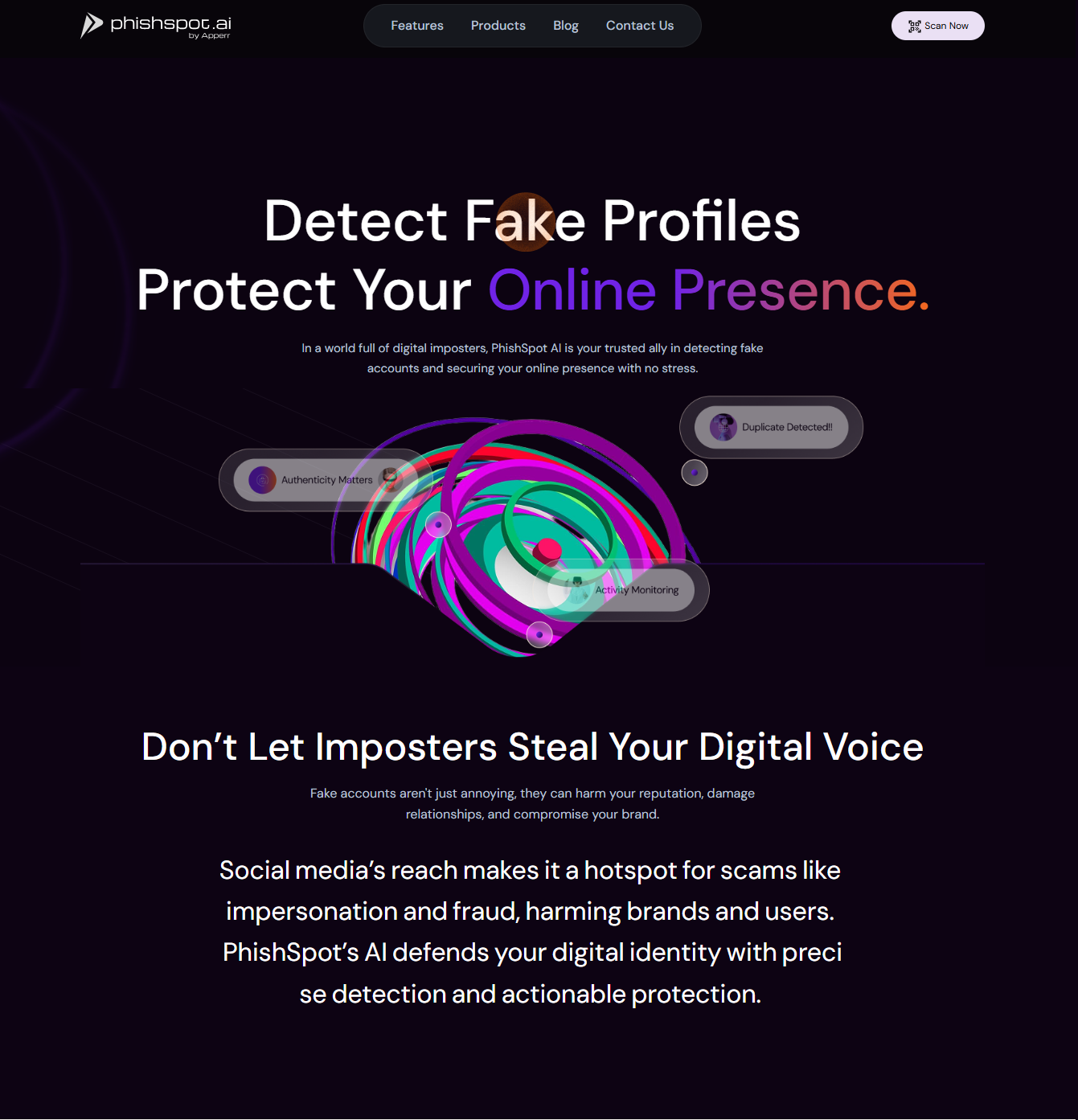
Online impersonation is no longer limited to celebrities.
Today, anyone with an online presence can become a target.
If you want to protect your online presence from fake accounts, PhishSpot AI was built for you.
If you’ve built an audience, your identity is valuable.
Fake Instagram accounts often:
This damages trust and can cost you partnerships. With PhishSpot AI, you can detect fake Instagram accounts quickly and proactively, instead of waiting for followers to report them.
Your brand reputation is everything. Impersonators may:
PhishSpot AI helps businesses with brand protection and social media security, ensuring customers interact with the real you.
If your name appears in search results, you are vulnerable to:
PhishSpot AI uses AI-driven scanning and metadata analysis to provide online impersonation protection that goes beyond standard platform reporting tools.
You don’t need 100K followers to be a target. Scammers frequently clone personal accounts to:
If you want to protect your online presence from fake accounts, PhishSpot AI gives you peace of mind in minutes.
Want to see exactly how fake account detection works in real time?
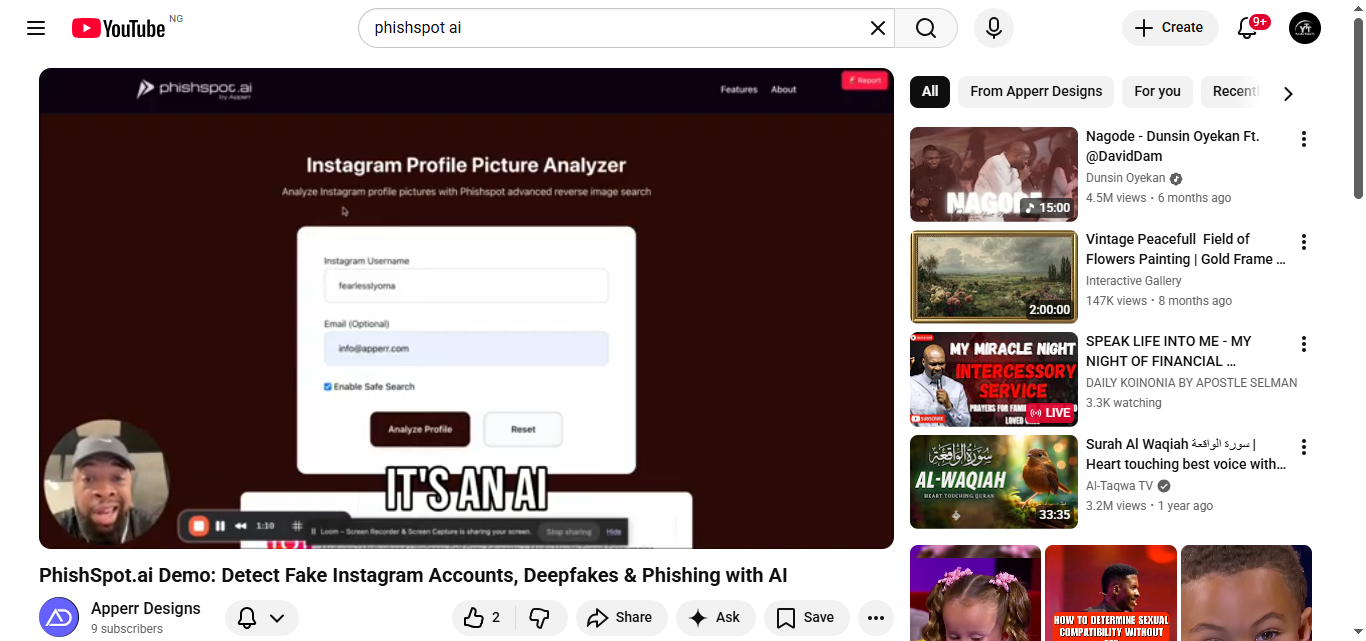
Identity-related fraud continues to rise, and social media impersonation is among the fastest-growing threats.
As AI tools become more advanced, manual detection becomes increasingly ineffective.
PhishSpot AI makes advanced cybersecurity:
You can look for inconsistencies in usernames, low-quality profile photos, suspicious follower patterns, and duplicate content. AI-powered tools like PhishSpot AI automate this process and provide deeper analysis.
Report the account immediately to the platform, notify your audience, and document evidence. Using monitoring tools can help you identify additional fake profiles.
Yes. Advanced AI systems analyze image patterns, metadata, and inconsistencies to determine whether an image may be AI-generated.
In many jurisdictions, impersonation used for fraud, harassment, or deception can be illegal. Laws vary depending on location and intent.
If you have an active online presence, regular monitoring is recommended. Automated scanning tools provide continuous oversight.
If you want real online impersonation protection, the next step is simple:
Your online identity is valuable.
Don’t let impersonators control it.
Protect your online presence from fake accounts before they find you.
%201.png)


